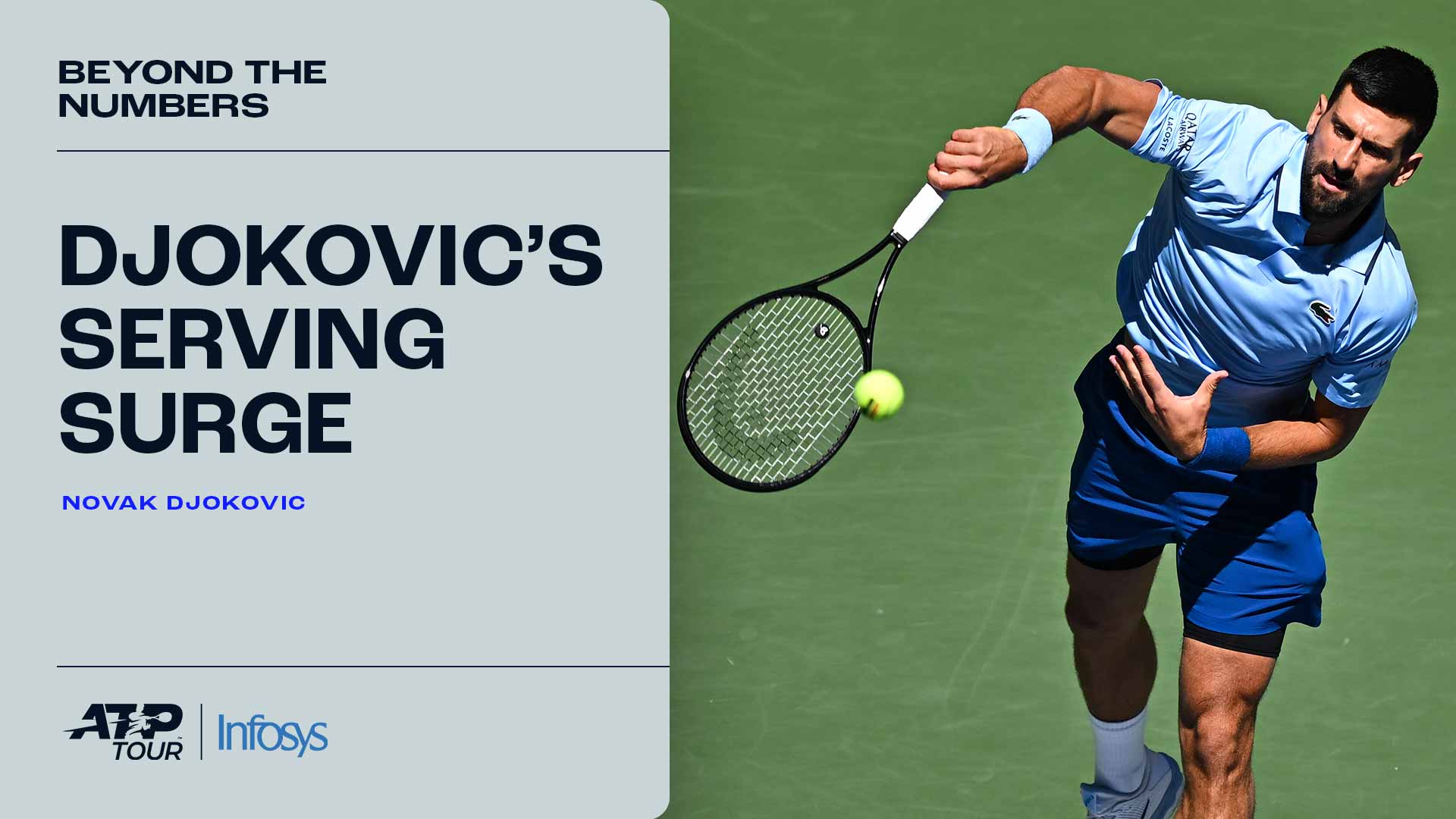
Novak Djokovic: Why His Serve's Accuracy Outranks Raw Power
In the pantheon of tennis legends, Novak Djokovic stands apart, not just for his record-breaking Grand Slam tally, but for his relentless pursuit of perfection in every facet of his game. While his return of serve, backhand, and relentless baseline play often steal the spotlight, there's one weapon that consistently underpins his success, especially in high-pressure moments: his serve. Far from being a raw power game, the `djokovic serve atp` circuit admires for its surgical precision and unmatched clutch performance. At 38, still competing at an elite level, Djokovic’s serve isn't merely good; it's a masterclass in strategic accuracy.
The Underrated Weapon: Precision Over Pace
For much of his illustrious career, Novak Djokovic's serve has been, by his own admission, somewhat underrated. It's rarely discussed with the same awe as the thunderous aces of a John Isner or a Reilly Opelka. Yet, its effectiveness is undeniable. After a stellar performance at the 2025 Miami Open semi-final against Grigor Dimitrov, where he landed an astonishing 51 of 57 first serves, Djokovic articulated his philosophy perfectly.
“Obviously I’m a baseline player. Most of my career return and backhand are probably the shots that have been talked about the most when it comes to my game and success,” he shared. “Maybe the serve has been a bit underrated, but I always liked my serve, particularly when it comes to accuracy and precision. That’s what I was looking for.”
This statement encapsulates the essence of the `djokovic serve atp` players consistently face. He isn't chasing headline-grabbing speeds. Instead, his focus is on hitting the lines, finding the perfect spot in the service box, and setting up an easy first shot in the rally. “I was never really looking to ramp up the miles per hour on the serve,” he added. “I mean, it’s great if you can serve 130-miles-an-hour serve, but I’d rather serve 120 miles an hour and hit the line and hit the perfect spot in the box because that’s what either wins you a point or gives you an easy first shot in the rally.” This tactical approach prioritizes a high first-serve percentage and strategic placement, creating opportunities rather than simply overwhelming opponents with brute force.
The "Clutch" Factor: ATP Players Speak Out
While fans and pundits might overlook the intricacies of his serve, those who stand across the net from him certainly don't. Chris Eubanks, a Wimbledon quarter-finalist in 2023, offered fascinating insights into what Tour players really think. Speaking on the Served podcast with Andy Roddick, Eubanks revealed, “Many players who I have spoken with who have played this person say the one area of his game that doesn’t get talked about nearly enough is Novak.” He then elaborated, confirming that ATP players widely regard Djokovic’s serve as "clutch."
What does "clutch" truly mean in the high-stakes world of professional tennis? It signifies the ability to deliver under immense pressure – saving break points, securing crucial holds, and seizing momentum in pivotal moments. Djokovic's career is replete with examples of this, such as his remarkable rally from two sets down against Jannik Sinner in the 2026 Australian Open semi-final. In these moments, it’s not about serving a missile; it’s about serving an unreturnable ball to the perfect spot, forcing an error, or generating a weak return that he can immediately capitalize on. The Reddit tennis community frequently echoes this sentiment, with users noting, "So many times that when he's in trouble, he hits a massive serve with perfect placement that gives him a free point." This reinforces the notion that the `djokovic serve atp` competitors fear most isn't the fastest, but the most precise when it matters most.
For a deeper dive into how his serve impacts his opponents, read
What ATP Players Really Think of Novak Djokovic's Clutch Serve.
Evolution of the Djokovic Serve: From Vulnerability to Strength
It’s important to remember that Djokovic’s serve wasn't always the weapon it is today. In his early career, particularly pre-2011, it was often considered a vulnerability. Double faults were more common, and it lacked the consistency and versatility it now boasts. However, through dedicated work and strategic adjustments, he transformed it into a formidable asset. This evolution is a testament to his relentless pursuit of improvement, demonstrating that even a world-class athlete can refine and elevate existing aspects of their game.
Today, the numbers reflect this transformation. While not typically labeled a "big server," Djokovic consistently registers impressive ace counts. In a recent year, he averaged 8.2 aces per match, a figure that rivals many players primarily known for their powerful serves. This statistic underscores that his aces are generated not just by power, but by deceiving placement and intelligent spin. This improved serve also has significant physical benefits, especially for a player of his age. By securing more free points or short rallies through effective serving, he conserves energy, reducing the wear and tear on his body and prolonging his career at the highest level. The strategic advantage of this evolution cannot be overstated, as discussed in
The Djokovic Serve: How It Became a Top Clutch Weapon for Aces.
The Tactical Genius Behind Djokovic's Serve
The effectiveness of the `djokovic serve atp` players struggle with stems from its intelligent design and execution. It's a multifaceted weapon, characterized by:
- Pinpoint Placement: Djokovic consistently targets the corners of the service box – wide to pull opponents off-court, down the 'T' to exploit their court positioning, and occasionally a body serve to jam them. This variety keeps returners guessing.
- Spin Variety: He employs a full arsenal of spins. His slice serve out wide on the deuce court pulls right-handers far off the court, opening up the forehand. His kick serve on the ad court pushes returners back, giving him time to set up. Flat serves are reserved for when he wants maximum pace and impact.
- Disguise: Djokovic has mastered the art of disguising his serve. His ball toss is often consistent across different serve types, making it challenging for opponents to anticipate where the ball will land or what spin it will carry.
- Mental Acuity: Perhaps most crucially, Djokovic possesses an unparalleled understanding of his opponents' return tendencies and weaknesses. He adapts his serve strategy mid-match, identifying patterns and exploiting vulnerabilities under the most intense pressure.
For aspiring tennis players, Djokovic's approach offers invaluable lessons. Rather than solely focusing on increasing serve speed, prioritizing accuracy, understanding spin, and developing strategic placement can be far more impactful for winning points and conserving energy. Regular target practice, varying serve types, and analyzing your opponent's return positions are practical steps to emulate this aspect of Djokovic's game.
Why Accuracy Trumps Raw Power in Modern Tennis
In an era where groundstrokes are hit with incredible power and athleticism, a truly great serve is one that creates an immediate advantage. While a 140 mph ace is spectacular, its consistency can be a challenge. A serve with surgical accuracy, even if slower, offers several key benefits that often outweigh raw power:
- Higher First Serve Percentage: Accurate serves are generally more consistent, leading to fewer double faults and a higher percentage of first serves in. This puts immediate pressure on the returner and denies them easy second-serve opportunities.
- Forced Weak Returns: Even if a serve isn't an ace, precise placement often forces a weak or defensive return, allowing the server to dictate the subsequent rally.
- Energy Conservation: By gaining free points or immediately seizing control of rallies, a precise server reduces the physical demands of a match, which is critical for longevity and performance in multi-set contests.
- Psychological Advantage: Knowing that an opponent can hit any spot on the court, especially under pressure, creates immense psychological strain for the returner.
Novak Djokovic exemplifies how this philosophy translates into sustained dominance. His serve, a testament to intelligent design and unwavering mental fortitude, remains a cornerstone of his game, proving that in tennis, brains often beat brawn.
Conclusion
Novak Djokovic's serve is a fascinating case study in strategic excellence. While not always the fastest, its blend of unparalleled accuracy, clutch performance, and tactical intelligence makes it one of the most effective weapons on the ATP Tour. From his own insights valuing precision over pace to the unanimous respect it garners from fellow players, the `djokovic serve atp` circuit witnesses is a masterclass in how to maximize impact without solely relying on raw power. As he continues to defy age and expectations, his serve remains a critical component of his ongoing success, a testament to his relentless dedication to perfecting every aspect of his game.